
Breast cancer
Breast cancer
Overview
• Breast cancer in males is rare.
• Men could have same type of breast cancer as women.
• Severity is about same.
• Occurs later in life between 60 and 70 years of age.
• Diagnosis is usually late because of it rarity and the hardness of male breast tissue.
Risk factors
• Family history of breast cancer
• Previous breast pathology
• Gynaecomastia (enlargement of breasts)
• Marital status ( never married at higher risk)
• Severe liver disease (cirrhosis)
• History of testicular diseases or injuries such as mumps arthritis, undefended testicles
• Oestrogen intake
• History of radiation exposure to the chest
• Klinefelter syndrome (strongest risk factor)
Symptoms:
Similar to those in women ( https://physiosparks.com/2019/10/18/symptoms-of-breast-cancer/)
*Painless lump with nipple involvement more common in men than in women.
Diagnosis:
Treatment:
Response to hormonal therapy in men with breast cancer is better than in women.
Monitoring following treatment:
Periodic screening is very important in any case of breast cancer as there is the risk of subsequent breast cancer on the other apparently healthy breast.

Every screening test has benefits and risks, which is why it’s important to talk to your doctor before getting any screening test, like a mammogram.
Benefit of Screening
The benefit of screening is finding cancer early, when it’s easier to treat.
Risks of Screening
*False Positive Test Results
Harms can include false positive test results, when a doctor sees something that looks like cancer but is not. This can lead to more tests, which can be expensive, invasive, time-consuming, and may cause anxiety.
*Overdiagnosis and Overtreatment
Tests also can lead to overdiagnosis, when doctors find a cancer that would not have gone on to cause symptoms or problems, or even may go away on its own. Treatment of these cancers is called overtreatment. Overtreatment can include treatments recommended for breast cancer, such as surgery or radiation therapy. These can cause unnecessary and unwanted side effects. Other potential harms from breast cancer screening include pain during the procedure and radiation exposure from the mammogram test itself. While the amount of radiation in a mammogram is small, there may be risks with having repeated X-rays.
*False Negative Test Results
Mammograms may also miss some cancers, called false negative test results, which may delay finding a cancer and getting treatment.
Talk to Your Doctor
Sometimes it can be hard to decide if you should get a screening test. Talk to your doctor to understand the possible benefits and risks to make the right decision for you.
Content source: Division of Cancer Prevention and Control, Centers for Disease Control and Prevention

What is a mammogram?
A mammogram is an X-ray picture of the breast. Doctors use a mammogram to look for early signs of breast cancer. Regular mammograms are the best tests doctors have to find breast cancer early, sometimes up to three years before it can be felt.
How is a mammogram done?
You will stand in front of a special X-ray machine. A technologist will place your breast on a clear plastic plate. Another plate will firmly press your breast from above. The plates will flatten the breast, holding it still while the X-ray is being taken. You will feel some pressure. The steps are repeated to make a side view of the breast. The other breast will be X-rayed in the same way. You will then wait while the technologist checks the four X-rays to make sure the pictures do not need to be re-done. Keep in mind that the technologist cannot tell you the results of your mammogram. Each woman’s mammogram may look a little different because all breasts are a little different.
What does having a mammogram feel like?
Having a mammogram is uncomfortable for most women. Some women find it painful. A mammogram takes only a few moments, though, and the discomfort is over soon. What you feel depends on the skill of the technologist, the size of your breasts, and how much they need to be pressed. Your breasts may be more sensitive if you are about to get or have your period. A doctor with special training, called a radiologist, will read the mammogram. He or she will look at the X-ray for early signs of breast cancer or other problems.
Tips for Getting a Mammogram
Try not to have your mammogram the week before you get your period or during your period. Your breasts may be tender or swollen then.On the day of your mammogram, don’t wear deodorant, perfume, or powder. These products can show up as white spots on the X-ray.Some women prefer to wear a top with a skirt or pants, instead of a dress. You will need to undress from your waist up for the mammogram.
When will I get the results of my mammogram?
You will usually get the results within a few weeks, although it depends on the facility. A radiologist reads your mammogram and then reports the results to you and your doctor. If there is a concern, you will hear from the mammography facility earlier. Contact your health care provider or the mammography facility if you do not receive a report of your results within 30 days.
What happens if my mammogram is normal?
Continue to get mammograms according to recommended time intervals. Mammograms work best when they can be compared with previous ones. This allows the radiologist to compare them to look for changes in your breasts.
What happens if my mammogram is abnormal?
An abnormal mammogram does not always mean that there is cancer. But you will need to have additional mammograms, tests, or exams before the doctor can tell for sure. You may also be referred to a breast specialist or a surgeon. It does not necessarily mean you have cancer or need surgery. These doctors are experts in diagnosing breast problems. Doctors will do follow-up tests to diagnose breast cancer or to find that there is no cancer.
Content source: Division of Cancer Prevention and Control, Centers for Disease Control and Prevention

A study has revealed the need to cut age for breast cancer scans. Up to 90,000 women with a family history of breast cancer should have annual exams from 35 years of age.
Source: Daily Mail
https://dailym.ai/2GIeNwn
Different people have different symptoms of breast cancer. Some people do not have any signs or symptoms at all.
Some warning signs of breast cancer are—
- New lump in the breast or underarm (armpit).
- Thickening or swelling of part of the breast.
- Irritation or dimpling of breast skin.
- Redness or flaky skin in the nipple area or the breast.
- Pulling in of the nipple or pain in the nipple area.
- Nipple discharge other than breast milk, including blood.
- Any change in the size or the shape of the breast.
- Pain in any area of the breast.
Keep in mind that these symptoms can happen with other conditions that are not cancerous.
If you have any signs or symptoms that worry you, be sure to see your doctor right away.
What Is a Normal Breast?
No breast is typical. What is normal for you may not be normal for another woman. Most women say their breasts feel lumpy or uneven. The way your breasts look and feel can be affected by getting your period, having children, losing or gaining weight, and taking certain medications. Breasts also tend to change as you age.
What Do Lumps in My Breast Mean?
Many conditions can cause lumps in the breast, including cancer. But most breast lumps are caused by other medical conditions. The two most common causes of breast lumps are fibrocystic breast condition and cysts. Fibrocystic condition causes noncancerous changes in the breast that can make them lumpy, tender, and sore. Cysts are small fluid-filled sacs that can develop in the breast.
Content source: Division of Cancer Prevention and Control, Centers for Disease Control and Prevention

Studies have shown that your risk for breast cancer is due to a combination of factors. The main factors that influence your risk include being a woman and getting older. Most breast cancers are found in women who are 50 years old or older.
Some women will get breast cancer even without any other risk factors that they know of. Having a risk factor does not mean you will get the disease, and not all risk factors have the same effect. Most women have some risk factors, but most women do not get breast cancer. If you have breast cancer risk factors, talk with your doctor about ways you can lower your risk and about screening for breast cancer.
Risk Factors You Cannot Change
- Getting older. The risk for breast cancer increases with age; most breast cancers are diagnosed after age 50.
- Genetic mutations. Inherited changes (mutations) to certain genes, such as BRCA1 and BRCA2. Women who have inherited these genetic changes are at higher risk of breast and ovarian cancer.
- Reproductive history. Early menstrual periods before age 12 and starting menopause after age 55 expose women to hormones longer, raising their risk of getting breast cancer.
- Having dense breasts. Dense breasts have more connective tissue than fatty tissue, which can sometimes make it hard to see tumors on a mammogram. Women with dense breasts are more likely to get breast cancer.
- Personal history of breast cancer or certain non-cancerous breast diseases. Women who have had breast cancer are more likely to get breast cancer a second time. Some non-cancerous breast diseases such as atypical hyperplasia or lobular carcinoma in situ are associated with a higher risk of getting breast cancer.
- Family history of breast cancer. A woman’s risk for breast cancer is higher if she has a mother, sister, or daughter (first-degree relative) or multiple family members on either her mother’s or father’s side of the family who have had breast cancer. Having a first-degree male relative with breast cancer also raises a woman’s risk.
- Previous treatment using radiation therapy. Women who had radiation therapy to the chest or breasts (like for treatment of Hodgkin’s lymphoma) before age 30 have a higher risk of getting breast cancer later in life.
- Women who took the drug diethylstilbestrol (DES), which was given to some pregnant women in the United States between 1940 and 1971 to prevent miscarriage, have a higher risk. Women whose mothers took DES while pregnant with them are also at risk.
Risk Factors You Can Change
- Not being physically active. Women who are not physically active have a higher risk of getting breast cancer.
- Being overweight or obese after menopause. Older women who are overweight or obese have a higher risk of getting breast cancer than those at a normal weight.
- Taking hormones. Some forms of hormone replacement therapy (those that include both estrogen and progesterone) taken during menopause can raise risk for breast cancer when taken for more than five years. Certain oral contraceptives (birth control pills) also have been found to raise breast cancer risk.
- Reproductive history. Having the first pregnancy after age 30, not breastfeeding, and never having a full-term pregnancy can raise breast cancer risk.
- Drinking alcohol. Studies show that a woman’s risk for breast cancer increases with the more alcohol she drinks.
Research suggests that other factors such as smoking, being exposed to chemicals that can cause cancer, and changes in other hormones due to night shift working also may increase breast cancer risk.
Conclusively, being a woman and getting older are the main risk factors for breast cancer.
Content source: Division of Cancer Prevention and Control, Centers for Disease Control and Prevention

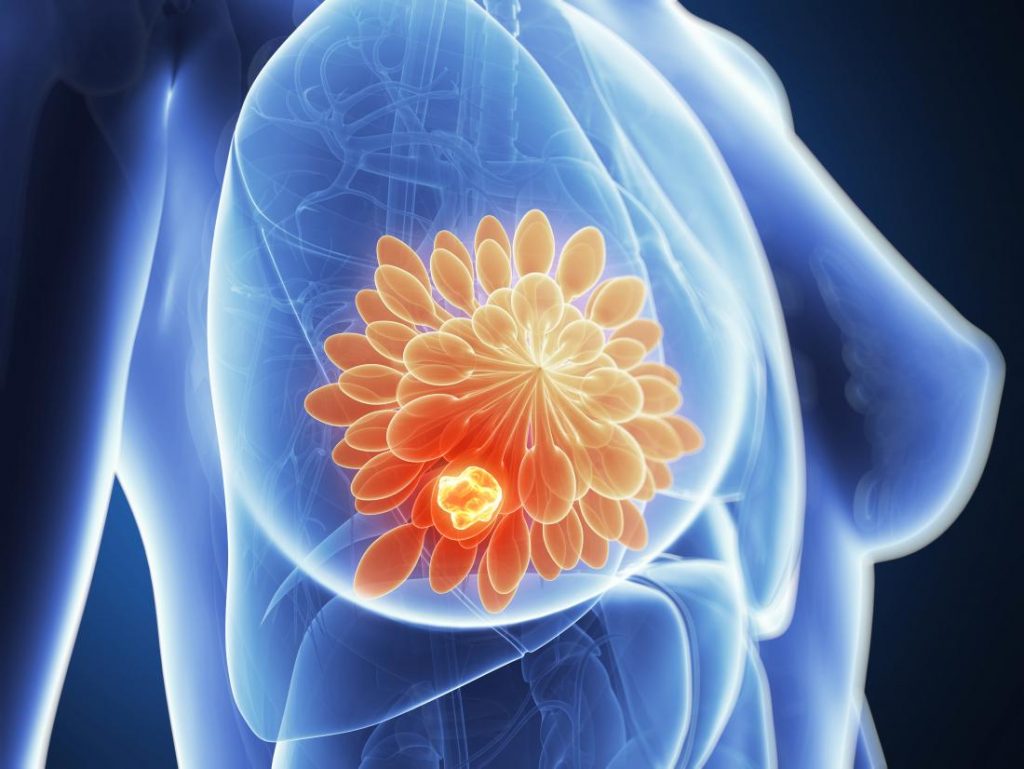
Breast cancer is a disease in which cells in the breast grow out of control. There are different kinds of breast cancer. The kind of breast cancer depends on which cells in the breast turn into cancer.
Breast cancer can begin in different parts of the breast. A breast is made up of three main parts: lobules, ducts, and connective tissue. The lobules are the glands that produce milk. The ducts are tubes that carry milk to the nipple. The connective tissue (which consists of fibrous and fatty tissue) surrounds and holds everything together. Most breast cancers begin in the ducts or lobules.
Breast cancer can spread outside the breast through blood vessels and lymph vessels. When breast cancer spreads to other parts of the body, it is said to have metastasized.
Kinds of Breast Cancer
The most common kinds of breast cancer are—
- Invasive ductal carcinoma. The cancer cells grow outside the ducts into other parts of the breast tissue. Invasive cancer cells can also spread, or metastasize, to other parts of the body.
- Invasive lobular carcinoma. Cancer cells spread from the lobules to the breast tissues that are close by. These invasive cancer cells can also spread to other parts of the body.
There are several other less common kinds of breast cancer, such as Paget’s disease, External medullary, mucinous, and inflammatory breast cancer.
External Ductal carcinoma in situ (DCIS) is a breast disease that may lead to breast cancer. The cancer cells are only in the lining of the ducts, and have not spread to other tissues in the breast.
Content source: Division of Cancer Prevention and Control, Centers for Disease Control and Prevention
Copyright ©2017 all rights reserved
Designed by Plethora Themes