

A study has revealed the need to cut age for breast cancer scans. Up to 90,000 women with a family history of breast cancer should have annual exams from 35 years of age.
Source: Daily Mail
https://dailym.ai/2GIeNwn
Articles & News
Articles & News
A study has revealed the need to cut age for breast cancer scans. Up to 90,000 women with a family history of breast cancer should have annual exams from 35 years of age.
Source: Daily Mail
https://dailym.ai/2GIeNwn

Doctors often use additional tests to find or diagnose breast cancer. They may refer women to a breast specialist or a surgeon. This does not mean that she has cancer or that she needs surgery. These doctors are experts in diagnosing breast problems.
If breast cancer is diagnosed, other tests are done to find out if cancer cells have spread within the breast or to other parts of the body. This process is called staging. Whether the cancer is only in the breast, is found in lymph nodes under your arm, or has spread outside the breast determines your stage of breast cancer. The type and stage of breast cancer tells doctors what kind of treatment you need.
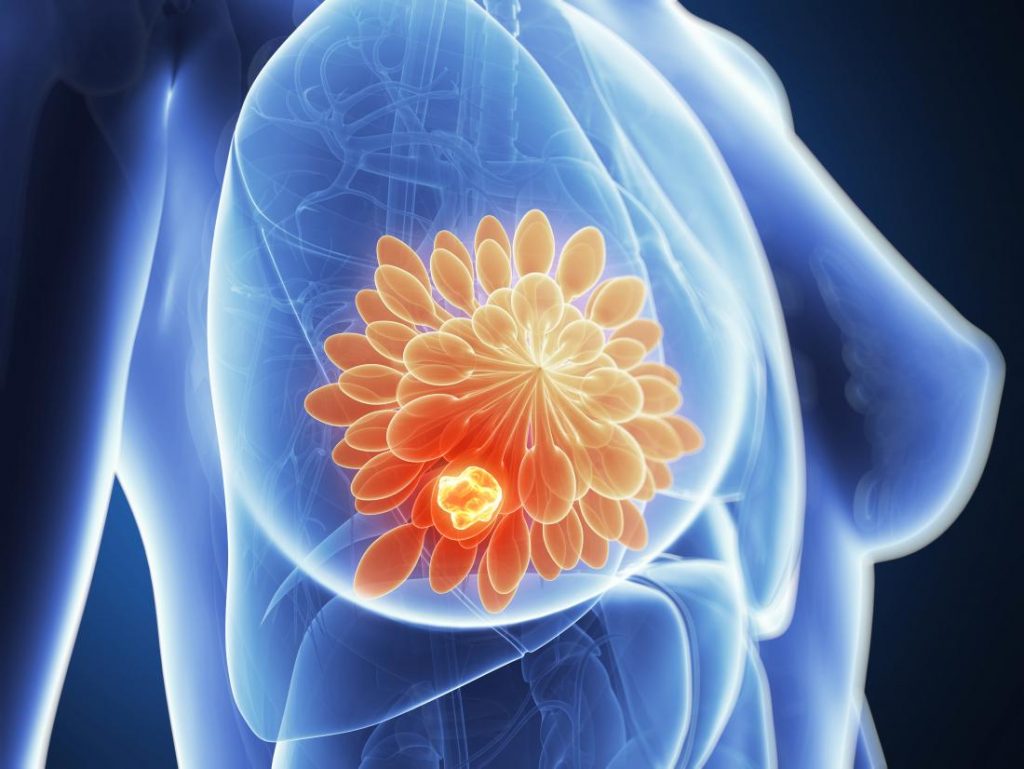
Different people have different symptoms of breast cancer. Some people do not have any signs or symptoms at all.
Some warning signs of breast cancer are—
Keep in mind that these symptoms can happen with other conditions that are not cancerous.
If you have any signs or symptoms that worry you, be sure to see your doctor right away.
No breast is typical. What is normal for you may not be normal for another woman. Most women say their breasts feel lumpy or uneven. The way your breasts look and feel can be affected by getting your period, having children, losing or gaining weight, and taking certain medications. Breasts also tend to change as you age.
Many conditions can cause lumps in the breast, including cancer. But most breast lumps are caused by other medical conditions. The two most common causes of breast lumps are fibrocystic breast condition and cysts. Fibrocystic condition causes noncancerous changes in the breast that can make them lumpy, tender, and sore. Cysts are small fluid-filled sacs that can develop in the breast.
Content source: Division of Cancer Prevention and Control, Centers for Disease Control and Prevention

Studies have shown that your risk for breast cancer is due to a combination of factors. The main factors that influence your risk include being a woman and getting older. Most breast cancers are found in women who are 50 years old or older.
Some women will get breast cancer even without any other risk factors that they know of. Having a risk factor does not mean you will get the disease, and not all risk factors have the same effect. Most women have some risk factors, but most women do not get breast cancer. If you have breast cancer risk factors, talk with your doctor about ways you can lower your risk and about screening for breast cancer.
Research suggests that other factors such as smoking, being exposed to chemicals that can cause cancer, and changes in other hormones due to night shift working also may increase breast cancer risk.
Conclusively, being a woman and getting older are the main risk factors for breast cancer.
Content source: Division of Cancer Prevention and Control, Centers for Disease Control and Prevention

Breast cancer is a disease in which cells in the breast grow out of control. There are different kinds of breast cancer. The kind of breast cancer depends on which cells in the breast turn into cancer.
Breast cancer can begin in different parts of the breast. A breast is made up of three main parts: lobules, ducts, and connective tissue. The lobules are the glands that produce milk. The ducts are tubes that carry milk to the nipple. The connective tissue (which consists of fibrous and fatty tissue) surrounds and holds everything together. Most breast cancers begin in the ducts or lobules.
Breast cancer can spread outside the breast through blood vessels and lymph vessels. When breast cancer spreads to other parts of the body, it is said to have metastasized.
The most common kinds of breast cancer are—
There are several other less common kinds of breast cancer, such as Paget’s disease, External medullary, mucinous, and inflammatory breast cancer.
External Ductal carcinoma in situ (DCIS) is a breast disease that may lead to breast cancer. The cancer cells are only in the lining of the ducts, and have not spread to other tissues in the breast.
Osteoarthritis (OA), also called degenerative joint disease, is the most common chronic condition of the joints. Since the disease is degenerative, it is the single most common cause of disability among older adults, with about 10 to 15 percent of all adults who are more than 60 years old have some degree of osteoarthritis, with more women affected than men. Among Africans, the hip and knee joints are mostly affected.
The condition happens when the cartilage, which works by providing cushion at the ends of the bones in the joints, wears away and breaks down. As a result, the bones rub against each other, causing severe pain and swelling.
The most common signs and symptoms of osteoarthritis include pain, decreased range of motion, decreased flexibility, swelling, and stiffness. The common risk factors include obesity, old age, and family history.
Treatment of osteoarthritis focuses on increasing physical activity, muscle strengthening exercises, taking pain killers and anti-inflammatory medicines, supportive devices, and surgery.
Currently, osteoarthritis is treated with lifestyle changes, physiotherapy, medications (including steroid injections) and surgery especially for severe cases. However, a new study by researchers at Boston University School of Medicine found that steroid injections in the hips and knees of patients with osteoarthritis are more dangerous than previously thought.
They discovered that accelerated arthritis and joint damage could be one complication and unintended result of corticosteroid injections.
Steroid injections may lead to joint collapse and may speed up the need for total hip or knee replacement. Usually, corticosteroids are used to stem inflammation in arthritis, and they’re usually injected into the joints to relieve pain and swelling.
The study, which was published in the journal Radiology, reveals how corticosteroids, though it can relieve pain and inflammation, is tied to complications that can potentially hasten the destruction of the joint.
“We are now seeing these injections can be very harmful to the joints with serious complications such as osteonecrosis, subchondral insufficiency fracture and rapid progressive osteoarthritis,” Dr. Ali Guermazi, chief of radiology at VA Boston Healthcare System and professor of radiology at BUSM, said.
“Intra-articular corticosteroid injection should be seriously discussed for pros and cons. Critical considerations about the complications should be part of the patient consent, which is currently not the case right now,” he added.
The study authors reviewed existing literature on the complications of steroid injections. They have determined four main adverse effects of the treatment, namely rapid joint destruction with bone loss, complications from osteonecrosis or bone tissue death, subchondral insufficiency fractures like stress fractures, and accelerated osteoarthritis progression with loss of the joint space.
Written by Angela Betsaida B. Laguipo, BSN

When trying to get pregnant, couples often change their lifestyles, going on crash diets or taking up stricter exercise regimens. New research, done on mice, suggests that men might be best off avoiding crash diets, as it may affect the heart health of their offspring.
While much research has shown the effects of maternal health on the offspring, very little is known about the impact of the father’s health. A study from researchers at the University of Nottingham published today in The Journal of Physiology shows that poor paternal diet, specifically low in protein, may impact the heart health of the offspring by changing their seminal fluid, which bathes sperm.
The researchers looked at the effect of low protein diets on both the sperm and seminal fluid of male mice. They studied the impact on offspring in four conditions: when the sperm was from a dad with a poor diet, when the seminal fluid was, when both were, and when neither was. They found that the heart health of offspring was negatively impacted when there was mismatch between the sperm and seminal fluid, meaning that one was from a poor dietary dad and the other from a dad with a normal diet, or vice versa.
Men on crash diets may be affected, as the quality of seminal fluid changes quickly, while sperm only changes after a few months, meaning that there might be a mismatch in the first few months of a diet, and this time may coincide with when they are trying to conceive.
These findings may have also implications for couples using assistive reproductive technologies such as IVF because IVF uses only the sperm, and this might result in a mismatch between the quality of sperm and seminal fluid.
Adam Watkins, senior author on the study said:
It is important that we understand how and why paternal diet impacts on the offspring, so we can suggest preventative measures for couples who are trying to conceive, such as dietary recommendations.”
Watkins, A., et al. (2019) Paternal Diet Impairs F1 and F2 Offspring Vascular Function Through Sperm and Seminal Plasma Specific Mechanisms in Mice. The Journal of Physiology. doi.org/10.1113/JP278270.

Young adults with depression whose diet is usually unhealthy showed significantly fewer symptoms of depression after eating a healthy diet for three weeks, according to a study published October 9, 2019 in the open-access journal PLOS ONE by Heather Francis from Macquarie University, Australia, and colleagues.
While much research has shown that eating a healthy diet rich in fruit, vegetables, fish, and lean meat is associated with a reduced risk of depression, there have been very few randomized controlled trials directly examining the link between the two, including for young adults, who are establishing health patterns and are also at higher risk for depression.
Francis and colleagues studied 76 university students (17-35 years old) exhibiting moderate-to-high depression symptoms and following a poor diet based on the Australian Guide to Healthy Eating (high in processed foods, sugar, and saturated fats). They randomized participants into a “diet change” group or a “regular diet” group. The diet change group was given brief instructions on improving their diet, as well as a healthy food hamper and $60 towards future groceries. Each group member also received two subsequent check-ins via phone call. The regular diet group did not get any diet instructions and were simply asked to return after the three weeks were up. Before and after the intervention, the researchers assessed participants’ scores for depression, anxiety and overall mood, and their performance on several learning and reasoning tasks.
At the end of the three weeks, the diet change group had successfully maintained a healthy diet and showed significant improvement in mood, with depression scores shifting into the normal range. The regular diet group’s depression scores remained stable in the moderate-to-high range. The diet change group also showed significantly lower anxiety scores than the regular diet group, though other measures were not significantly different between the groups.
The authors followed up with 33 of the participants after three months. In this small sample, they found that while only 21 percent of these participants fully maintained the healthy diet, those that did maintained their improvements in mood.
This study is limited in that the no change group received no intervention – ideally, this group would have received alternative diet instructions, check-ins and monetary contributions to parallel the diet change group. These findings are also derived from a small, specific population of university students. However, they provide preliminary evidence that relatively small, simple diet adjustments can directly improve depression symptoms, and that these effects can last up to three months.
The authors add:
Modifying diet to reduce processed food intake and increase consumption of fruit, vegetables, fish and olive oil improved depression symptoms in young adults. These findings add to a growing literature showing a modest change to diet is a useful adjunct therapy to reduce symptoms of depression.”
Francis, H.M. et al. (2019) A brief diet intervention can reduce symptoms of depression in young adults – A randomised controlled trial. PLOS ONE. doi.org/10.1371/journal.pone.0222768.
Content Warning: This video contains scenes of adult nature.
Watch these:
https://physiosparks.com/2020/07/03/low-back-pain-symptoms/
Kindly read this:
https://physiosparks.com/2021/09/10/busting-the-myths/
It would be a great honour for us to count on your participation in this short survey on lumbar corset: https://physiosparks.com/2023/06/14/lumbar-corset/
Please subscribe to our YouTube channel: https://youtu.be/zal3NtSimL4 (physiosparks) for more health videos.
Like our Facebook page:
https://web.facebook.com/physiosparks08/
Follow us on Instagram:
https://www.instagram.com/physiosparks/
Follow us on Twitter:
https://twitter.com/physiosparks
Donate to support us:
https://physiosparks.com/lend-a-hand/

Diabetes is a major cause of many complications such as stroke, heart attack, kidney failure, blindness, and lower limb amputation. At least 1.6 million people had died due to diabetes in 2016. Insulin resistance is a driving factor that leads to type 2 diabetes, which in itself can lead to a plethora of complications including cardiovascular disease, kidney damage, vision loss, and neuropathy.
Type 2 diabetes is a chronic condition that happens when the pancreas does not produce adequate amounts of insulin, or the body can’t effectively utilize the insulin it produces. Across the globe, there are an estimated 422 million people who have diabetes in 2014, up from 108 in 1980.
There are many factors that can contribute to the development of type 2 diabetes, and scientists are still uncovering more. Now, a team of researchers at the Harvard T.H. Chan School of Public Health has released a study suggesting that drinking more than two artificially sweetened or sugary soft drinks each day increases the risk of diabetes.
Sugary drinks, also called sugar-sweetened drinks or soft drinks, are beverages containing added sugar and other sweeteners, such as fruit juice concentrates, sucrose, and high fructose corn syrup. Included in the sugary drink category are cola, tonic, pop, soda, lemonade, and fruit punch, to name a few.
Collectively, these drinks are the single largest source of added sugar and calories in the U.S. diet. In other countries, the consumption of sugary drinks is increasing significantly due to widespread beverage marketing and urbanization.
Published in the journal Diabetes Care, the study aims to look for the long-term effects in the consumption of artificially-sweetened beverages (ASBs) and sugar-sweetened beverages (SSBs), and its connection with the risk of developing type 2 diabetes.
The team found that drinking more artificially-sweetened beverages, as an alternative to sugar-sweetened beverages, such as soda and fruit juices, increases the risk of type 2 diabetes, which is a chronic condition wherein the blood sugar level elevates.
The study revealed that those who increase their sugary beverage consumption may have a greater risk of having type 2 diabetes. There are two types of sugar drinks – sugar-sweetened beverages (SSBs) such as sodas and fruit juices, and artificially-sweetened beverages (ASBs), such as diet drinks.
The researchers discovered that those who drank more SSBs had a higher risk of type 2 diabetes. The increase in risk was even true for those who drank ASBs, often branded as diet drinks. The risk of diabetes reduced when one daily serving of the sugary drink was replaced with water, tea, or coffee.
For the study, the team recruited 192,000 adults who are participants in three long-term studies – the Health Professional’s Follow-up Study, Nurses’ Health Study, and the Nurses’ Health Study II.
They divided the participants into three groups, the first group had type 2 diabetes, the second group had an uncommon type of diabetes, also called latent autoimmune diabetes in adults (LADA), which is characterized to have the symptoms and hallmarks of both type 1 and type 2 diabetes. The last group had no diabetes and were healthy.
They also tracked the participants’ changes in sugary drink consumption for a long period through a food frequency tool answered every four years.
The team of researchers found that those who drank more than two sugary drinks each day were twice as likely to develop diabetes. However, they found that the link was weaker in those who have LADA. Specifically, they found that a high consumption of sweetened beverages by about 4 ounces each day for four years is tied to an 18-percent increase in the risk of diabetes.
Hence, replacing sugary drinks with water, tea, or coffee can help reduce the risk by 2 to 10 percent.
The study results are in line with current recommendations to replace sugary beverages with noncaloric beverages free of artificial sweeteners. Although fruit juices contain some nutrients, their consumption should be moderated.”
Frank Hu, Study Author & Professor of Nutrition and Epidemiology
Sugary drinks typically contain 7 to 10 teaspoons full of sugar. To put this in perspective, a teaspoon of sugar is around 4.2 grams.
Aside from sodas, energy drinks also contain added sugars. These drinks contain as much sugar as sodas, but also contain caffeine that can increase the blood pressure. Some products even contain unknown ingredients whose long-term health effects have not yet been explored or identified.
The take-home message? Skip sugary drinks and drink more water.
Written by Angela Betsaida B. Laguipo, BSN
Drouin-Chartier, J. P., et al. (2019). Changes in Consumption of Sugary Beverages and Artificially Sweetened Beverages and Subsequent Risk of Type 2 Diabetes: Results From Three Large Prospective U.S. Cohorts of Women and Men. Diabetes Care. DOI: 10.2337/dc19-0734